Constitution Strengthening Campaign “Samvidhanada Kadege Namma Nadige” – Our Walk Towards the Constitution
Jagrutha Mahila Sanghatane (JMS) initiated the Constitution Strengthening Campaign in September 2023, to deepen awareness of constitutional values and nurture communal harmony. By engaging women, youth, and school children through songs, skits, participatory workshops, and public dialogues, the campaign connects the ideals of the Indian Constitution to everyday life. It inspires communities to recognize their rights, uphold justice, and strengthen democratic participation at the local level.
Objectives
Promote Constitutional Values: Spread awareness of the Preamble and fundamental rights, linking them to daily struggles and aspirations.
Strengthen Communal Harmony: Encourage inclusive participation across villages, schools, and self-help groups to build unity and solidarity.
Empower Marginalized Communities: Equip women, youth, and children with knowledge to access entitlements and demand accountability.
Foster Democratic Citizenship: Create spaces for dialogue, role plays, and collective action that reinforce justice, equality, and fraternity.
Celebrate Ambedkar’s Vision: Highlight Dr. B.R. Ambedkar’s contributions to women’s rights and the framing of the Constitution, inspiring communities to carry forward his legacy.2024 – Public Schools Engagement
2024 – Public Schools Engagement
Activities:
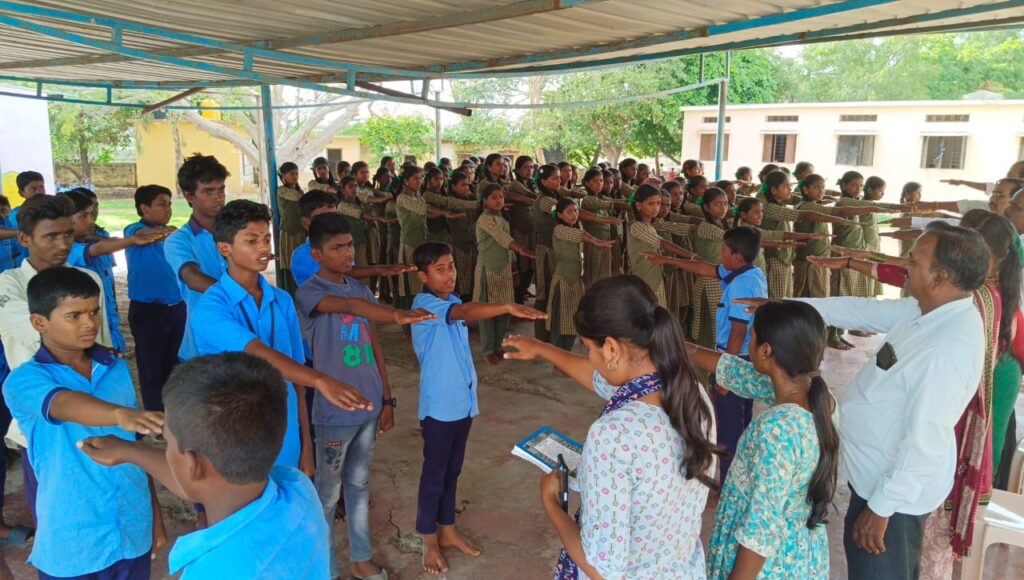
Reached 17 government schools across Raichur district. Children recited the Preamble and discussed fundamental rights. Developed participatory modules: songs, slogans, skits, role plays, and quizzes.
Focus:
Article 14 (Equality before law). Article 21A (Right to free and compulsory education).
Impact:
3,500 students engaged in discussions, plays, and competitions. Awareness on child marriage, child labour, and gender equality. 2025 – Constitution strengthening campaign activities
As part of empowering rural girls, JMS identified and supported 49 promising young women from marginalized communities to continue their higher education in 2025. Honored during the Silver Jubilee celebrations, each student received a backpack with the JMS logo, notebooks, pens, clothes, and a certificate, along with small financial assistance where needed. This initiative not only encouraged dignity, confidence, and motivation among the students but also helped reduce dropout rates, ensuring that more girls from rural areas could pursue their studies with pride and determination.
JMS, in collaboration with Gram Panchayats, jointly celebrated Constitution Day 2025
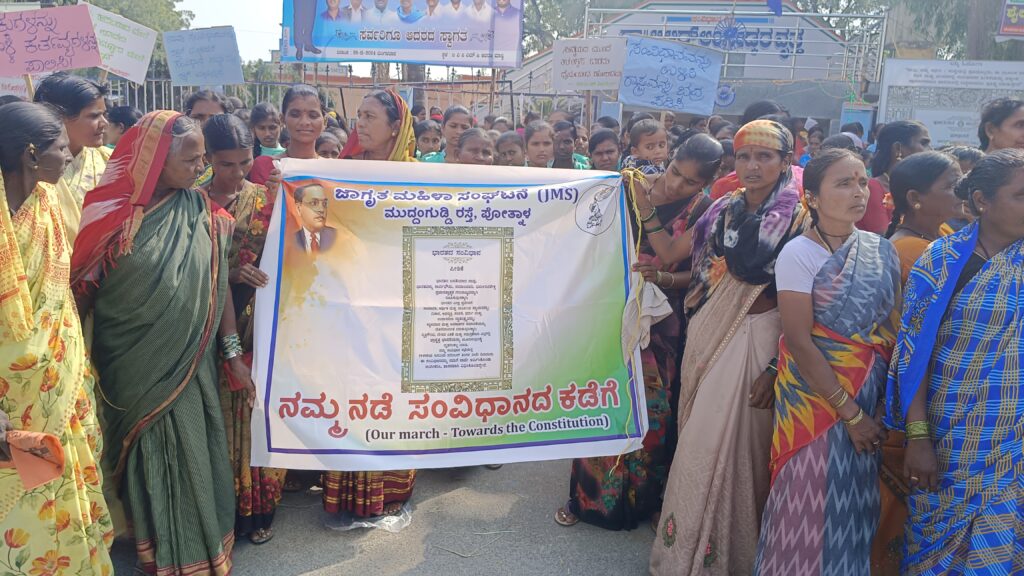
In November 2025, to commemorate the 76th Constitution Day, Jagrutha Mahila Sanghatane (JMS), in collaboration with the Gram Panchayats of Pothnal, Goudanabhavi, Bagalawada, and Ramathnala, organized the campaign “Samvidhanada Kadege Namma Nadige” across the taluks of Manvi, Maski, Sirwara, and Sindhanur in Raichur District.
Activities:
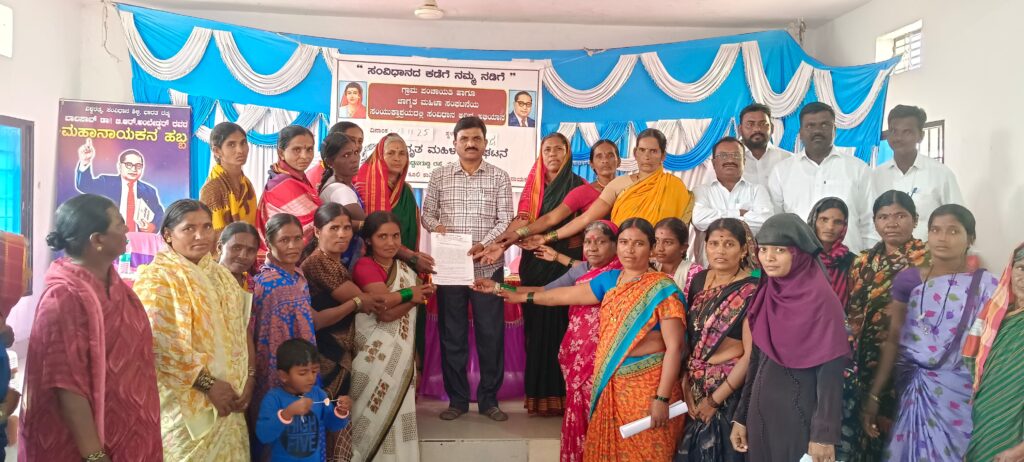
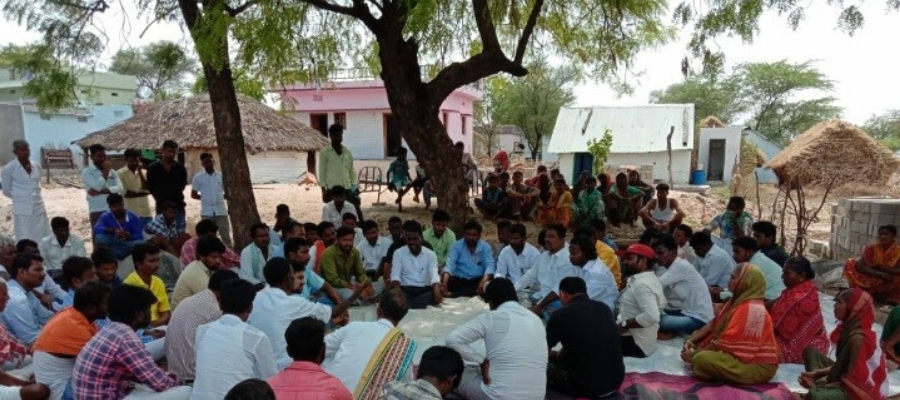
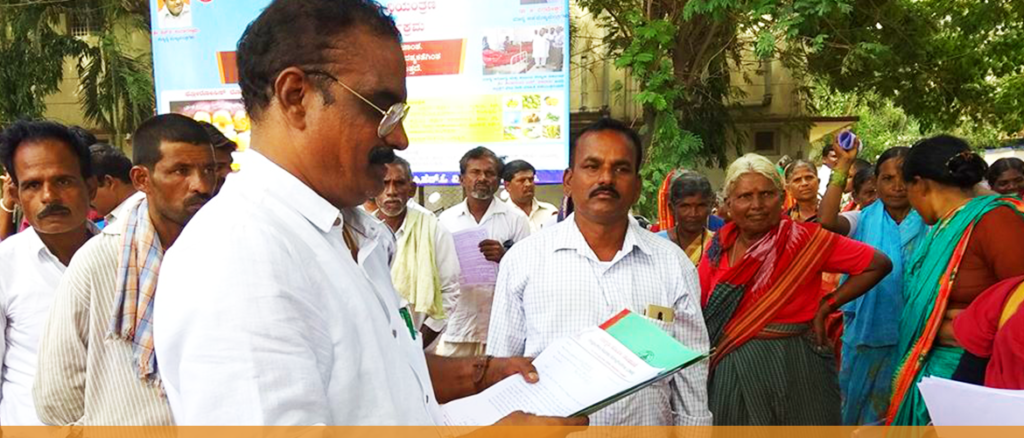
3,000 pamphlets distributed on the Understanding Constitution and its core values across villages. During community meetings, women’s groups came together to read, reflect, and understand constitutional rights by strengthening grassroots awareness and unity. Collective recitations of the Preamble, slogans, and songs in 20 villages. Memorandums submitted to Panchayat leaders demanding accountability. Resource persons highlighted Dr. B.R. Ambedkar’s contributions to women’s rights and the Constitution.
Impact:
1500 women participated, strengthening grassroots democracy.
Positive response from Gram Panchayat officials, reaffirming communal harmony.
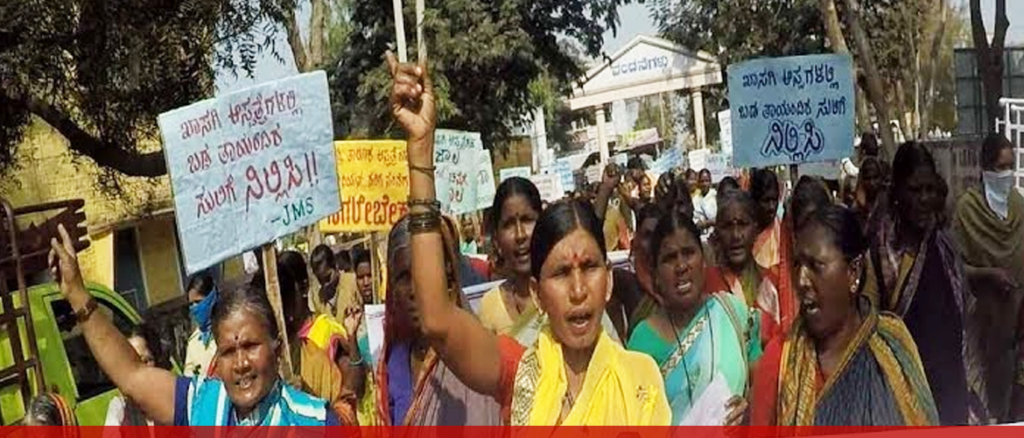
Rally - Manvi Taluk
JMS UPDATE
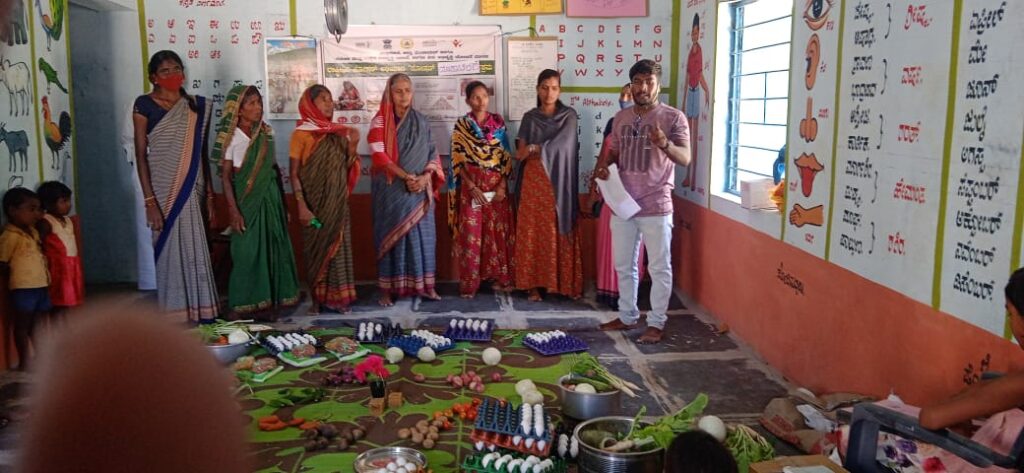
After JMS interventions at the Women & Child department and at Zilla Panchayat Raichur, the construction of the village heath nutrition day and Poshan Abhiyan programs are been regularized in Anganwadi center in Gonwara Village.
The 1st phase extends through the formative years of JMS, viz. 1999-2005. This is the mobilisation phase of JMS. During this time, the interventions in the right to food and nutrition was linked to the right to work and livelihood. ‘Kooligaagi kaalu’ [food for work] was a scheme that the government of Karnataka periodically roll out when there was a declaration of drought. Even to get that adequately, people to put up strong demand. As there were frequent droughts in the drough prone areas of Raichur, food and work issues, were raised hand in hand.
Key Milestones
Study of Access to Anganwads in 2000: In the year 2000, JMS took up a study on Dalit children’s access to anganwadis and nutrition. Ms. Chauramma studied the anganwadis of Tadakal, Markamdinni and Malkapura villages. This report was submitted to Community Health Cell, Bangalore as part of the mobilisation for the foundationof People’s Health Movement. The report put together found the ICDS centres generally located in the upper caste sections of the village thus restricting children’s access. Apart from this, the anganwadis did not have adequate supplies of nutrition, the child education was missing, Dalit children were given food in a piece of newspaper which they had to carry home and eat. The food however, spilt all over the street as dogs chased children. The upper caste children were received food in plates.
Initiation of Dialogue with some anganwadi sevikas: Whenever JMS found irregularities, with a small fact finding, JMS locally held discussions with Anganwadi workers. JMS was also aware of the exploitation of Anganwadi workers, pilferage of food and nutrition items at the district level itself etc. In several villages, Anganwadi workers were responsive.
SCI orders and the Right to Food Campaign in 100 villages: The PIL in the Supreme Court of India on right to food [PUCL vs. Union of India, 196/2001) provided its first initial orders in 2004. The first orders spoke of food and nutrition at the village level and had several directives. These included keeping the PDS shops open for 8 hours, changed timings to make it accessible for people, 25 kgs of grains for those below poverty line (Anna Antyodaya) and providing hot food in anganwadis etc. JMS translated these orders into Kannada and prepared a pamphlet and was the first organisation to do so in Karnataka. JMS also prepared a poster with the help of Human Rights Law Network (HRLN) in Kannada and distributed to several organisations in Karnataka. With these tools and knowledge, JMS organised a large scale campaign in 100 villages. It was supported by youth from Sakhi-hospet who also performed street plays, sang songs. The new orders were handed over to each of the PDS owners, anganwadi sevikas and about 10,000 households were reached during this campaign to disseminate about the SCI orders and people’s right to food.
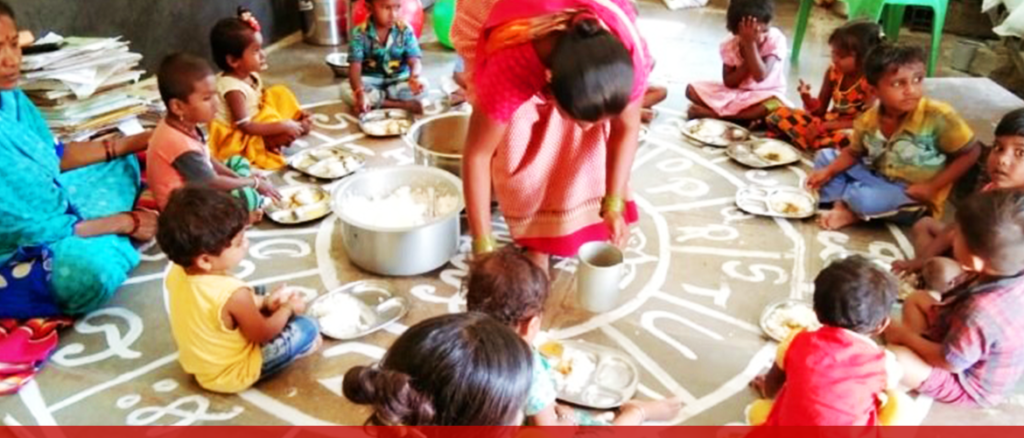
During the 2nd phase, the mobilisation around SCI orders became a regular part of JMS’ work. During this phase 12 women leaders chose cluster of villages for themselves and stayed in those villages. Visiting Dalit communities, monitoring food and nutrition situation, monitoring children’s access to food in anganwadis became a regular feature. In the right to health campaign issues of nutrition, food, functioning of PDS were reported. Using the newly enacted Right to Information Act was an added strength during this phase. On a larger scale, Midday Meals became part of children’s entitlement. Monitoring midday meals also came on the monitoring list of JMS. Facilitating the appointments of enterprising Dalit Women to the job of cooking in schools was taken up by JMS amidst several instances of social boycott that was declared by the upper castes on Dalits in many villages as Dalit women ventured into cooking in schools and anganwadis, as that post was reserved to them. For the upper castes it was a violation of their traditional caste-norm as their children now had to eat the food cooked by the ‘untouchable women’.
Key Milestones
Regular Monitoring of Anganwadis, PDS shops and midday meals: The JMS sanchalana samiti routinely started visiting ICDS centres, PDS shops and schools for checking on the quality of food. This became the regular monitoring work of JMS.
Addressing issue of appointment of cooks and helpers: In Muddanagudi, for example, Dalit woman from JMS sangha applied for cook’s job in the school for the midday meal scheme. The other castes led by Lingayats vehemently opposed the appointment of Jokinamma as cook as she was a Dalit, and children will have to eat food cooked by her. They proposed another candidate from non-Dalit community. JMS put up a fierce fight against this. Finally, while JMS was not relenting, as a compromise Jokinamma was appointed as the supervisor (a higher post) and another woman from another caste was appointed as a cook. In several other places where JMS is not active, there were social boycots on Dalits for being appointed as cooks. JMS took delegaions to the district authorities on this issue. As per the Supreme Court order, SC women had to be appointed as cooks as part of ensuring employment and food security to those households.
Providing ground level report to Right to Food Commissioner: During this phase, JMS became part of the national Right to Food Campaign. Periodically, ground level reports on the functioning of the schemes in villages was filed by JMS. These reports were sent to the RFT commissioner who were appointed by the Supreme Court of India.
RTI applications regarding PDS shops, supply and distribution: JMS sanchalana samiti and karyakarthas got themselves trained in the new transparency and accountability legislation, vis. Right to Information Act (RTI). RTI applications were filed asking information on the amount of food supplies, number of people whom it is distributed and the names of people whom it is given. JMS had already compiled names of people whom ration was not given, as most of the PDS shops would never open. When information was not received within the stipulated 30 days, appeal was filed at the district level. This was like hitting hornest’s nest in the area, during which several threatening calls were received by the karyakarthas.
Stopping corruption and pilferage from PDS: When JMS stood firm against threats and in some instances offer for compromise, 10 PDS shop owners came to JMS for negotiations. Meeting with people was held. The PDS shop owners promised that they will regularly supply food-grains to people. A signed undertaking was taken from all of them in the presence of sangha members from all these villages. This was a great moral victory for JMS. [They came for negotiations in the context of other RTI applications that were filed in the gram panchayats. When they refused to provide information, JMS appealed to the RTI commission in Bangalore. 4 GP secretaries were fined 20,000 rupees each and one was suspended. This prompted the PDS owners to come to JMS to negotiate].
Pothnal PDS owner stops supplying PDS food-grains to Utakanur Temple Fair: Pothnal PDS is shop is controlled by the biggest land-lord of Pothnal. He has tremendous control over Gram Panchayat, school and local institutions. PDS shop of Pothnal village, located near the land-lord’s house used to supply three months of food-grains to a temple fair (jathre) in Utakanur, wich is dedicated to a Lingayat Holy Man, and is about 18 kms away. The Utakanur Jathre is known all over north Karnataka. However, it was known as ‘gowda gave food grains’, while actually it was the PDS food-grain that was supplied, keeping the PDS shop closed for over three months. Due to the relentless campaign of JMS, RTI applications and complaints, the PDS shop-owner finally approached JMS and promised that food-grains will be given to people regularly. This was another great moral victory for JMS in the area.
The third phase extended between 2012-2017 amidst massive socio-political changes in the country. In 2011 and 2012, the issues of lowered allocation of budget to PDS, ICDS was resonating all over the country. Alongside, there were efforts to cut-down on cooked food, outsourcing of food supply to private entities etc. In Karnataka, there were two petitions in the High Court. One related to the severe malnutrition that was reported from Raichur. Another one, related to the outsourcing of anganwadi food to a private company called Chrityfired Foods in the place of hot cooked food. This added to the issue of malnutrition of children. During this phase, JMS continued its monitoring of ICDS, PDS and midday meals, often submitting petitions to the authorities with regular details. Participation in the fact-finding studies, submitting reports to the High Court of Karnataka on the issue of malnutrition and children were the high lights of this phase.
Key Milestones
Intensive community monitoring on the food and nutrition availability: JMS sustained and intensified monitoring of anganwadis, quality of midday meals, regularity of PDS shops. Collective actions to confront corruption and delegations to the district offices in this regard became a regular feature.
Food Security of senior citizens and the elderly: Another issue that seriously cropped up during this phase was the social security and hunger of the elderly. The pensions were not reaching in time and by and large, this group of the elderly was more vulnerable. Adhar card linkages and digitalisation had already become the mainstream feature during this time, which in may instances due to the mismatch of names, age and adhar number, disenfranchised many a senior citizen. JMS took up the issue of renewing the pensions of senior citizens, reaching the money in time, monitoring people in the villages for their food and health care related needs. Over 2000 applications for renewal of the pensions was done.
Collective victory in the HC of Karnataka on anganwadi food: JMS contributed quite significantly to the right to food campaign in Karnataka and in the issue of malnutrition in Raichur. It joined hands with several networks such as Samaja Parivartana Janaandolana (SPJ). JMS also did fact-finding during this stage and filed these reports in the HC of Karnataka. As a collective victory, the HC of Karnataka, cancelled the contract of supplying packaged food to anganwadis that was given to Chrystifried Foods and fresh cooked food was ordered to be served to children. The health care for the severely malnourished was also ordered to be done.
The current phase of JMS, starting from 2018, is marked by the formation of two more talukas in Raichur, viz. Maski, Sirwar and the expansion of the constituency of JMS and a more concerted campaign regarding the right to food and nutrition issues. The core group of JMS gained skills in using smart-phones, social media such as whatsapp and have been aided by others in using emails to document and communicate with authorities. JMS also very actively rejuvenated its social media, especially Facebook, to disseminate its work. Similarly, using smart phones, whatsapp, gathering evidence from the communities became easier.
As part of empowering rural girls, JMS identified and supported 49 promising young women from marginalized communities to
continue their higher education in 2025. Honored during the Silver Jubilee celebrations, each student received a backpack with the JMS logo, notebooks, pens, clothes, and a certificate, along with small financial assistance where needed. This initiative not only encouraged dignity, confidence, and motivation among the students but also helped reduce dropout rates, ensuring that more girls from rural areas could pursue their studies with pride and determination.
JMS, in collaboration with Gram Panchayats, jointly celebrated Constitution Day 2025
In November 2025, to commemorate the 76th Constitution Day, Jagrutha Mahila Sanghatane (JMS), in collaboration with the Gram Panchayats of Pothnal, Goudanabhavi, Bagalawada, and Ramathnala, organized the campaign “Samvidhanada Kadege Namma Nadige” across the taluks of Manvi, Maski, Sirwara, and Sindhanur in Raichur District.
Activities:
3,000 pamphlets distributed on the Understanding Constitution and its core values across villages.
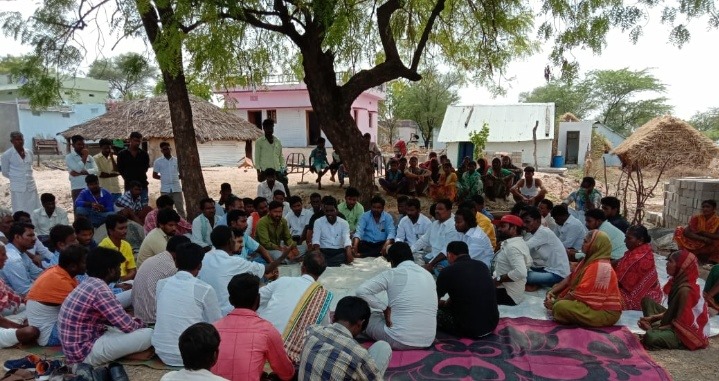
During community meetings, women’s groups came together to read, reflect, and understand constitutional rights by strengthening grassroots awareness and unity.
Collective recitations of the Preamble, slogans, and songs in 20 villages.
Memorandums submitted to Panchayat leaders demanding accountability.
Resource persons highlighted Dr. B.R. Ambedkar’s contributions to women’s rights and the Constitution.
Impact:
1500 women participated, strengthening grassroots democracy.
Positive response from Gram Panchayat officials, reaffirming communal harmony.